
Hidden Ingredients : Seeing What’s Beneath the Label
The Vital Pulse Hidden Ingredients section helps you notice animal-derived ingredients in everyday food, cosmetics, and household products without overwhelm or guilt. This page introduces why labels matter, how to approach them gently, and why even checking one product is already progress.
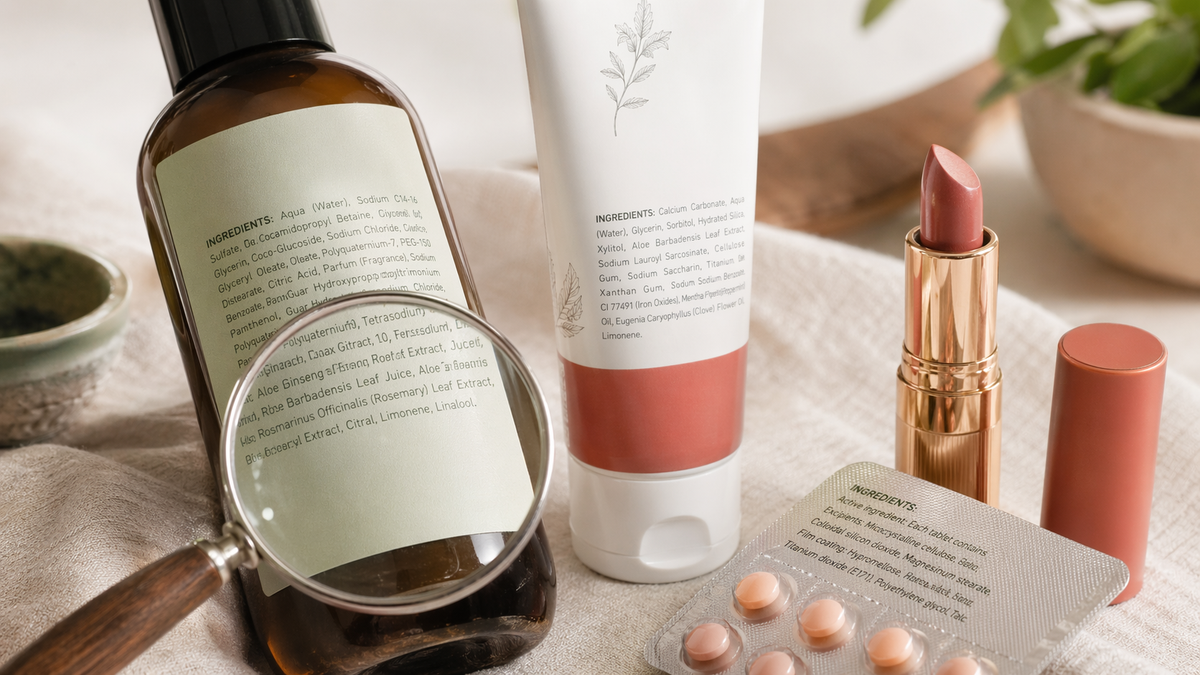
A calm guide to what's inside everyday products
Most animal-derived ingredients don't announce themselves. They don't say "meat" or "milk" they hide behind technical names on the back of a snack packet, in the fine print on a cheese label, or buried in a cosmetics ingredients list.
The Hidden Ingredients section of The Vital Pulse exists to gently shine a light on all of that. Not to alarm you, but because a lot of us are genuinely curious about what we're actually buying and we just don't have the time or headspace to decode scientific terminology every time we go shopping.
Here you'll find plain-English explanations for common animal-derived ingredients: things like gelatin, rennet, whey, and carmine, along with similar terms that pop up in cosmetics and household products. The goal is simple, help you start recognizing patterns so you can make clearer choices, one product at a time.
What this section covers
Hidden Ingredients is really about making labels less intimidating.
Over time, it'll build up into a set of guides covering:
Animal-derived ingredients in food Straightforward explanations for things like gelatin (made from animal collagen), rennet (used in certain cheeses), whey (a dairy by-product), and some colouring agents. You'll start to recognize which products might contain animal-derived components and when a plant-based alternative actually exists.
Animal-based components in cosmetics and personal care Plenty of beauty and skincare products contain animal-derived ingredients, often listed under names most of us have never heard of. This section will highlight the most common ones and give you a realistic sense of how to spot cruelty-free or plant-based options no chemistry degree required.
Less obvious animal content in household items Some glues, waxes, and additives in everyday household goods are also animal-derived. You'll find gentle, practical guidance on where these tend to show up and how to start noticing them without turning it into a full-time project.
Practical label-reading habits Rather than expecting you to scrutinize everything, Hidden Ingredients encourages small, manageable habits like checking a label when you're trying something new, or when you already have a spare moment. The point is to help you recognize patterns, not to add another thing to stress about.
Throughout, the language stays simple and welcoming. The goal is clarity, not anxiety.
Why small steps matter
Label-reading can get overwhelming fast. The text is tiny, the terms are strange, and you're usually in a hurry. It can also feel emotionally heavy when you realize how many everyday products quietly conflict with your values.
That's exactly why The Vital Pulse treats this as an area for small steps not sweeping overnight changes. You don't need to turn every shopping trip into a research project. Awareness can grow at its own pace, in line with what's actually possible for you right now.
In practice, small steps here might look like:
- Picking one category: sweets, cheese, lipstick and just getting familiar with that before moving on
- Checking the label on something new you're curious about, while letting your regular products stay as they are for now
- Learning a handful of terms that matter most to you and starting by scanning for those
- Accepting that sometimes budget, convenience, or limited availability will make the kinder choice impossible and knowing that doesn't cancel out the kinder choices you do make
Even checking one label with genuine intention is real progress. It's a moment where you slowed down, looked more closely, and let your values inform your awareness. Those moments add up quietly, without the pressure of all-or-nothing thinking.
A Malaysia-first approach, useful anywhere
Because The Vital Pulse is rooted in a Malaysian context, most examples here will draw from products you'd actually find in local supermarkets, minimarts, pharmacies, and the online platforms people use in this region.
You'll see references to familiar local snacks, dairy products, and cosmetic brands, along with notes on how ingredients tend to be listed in this market. The idea is to meet you where you already shop.
That said, the practice of noticing hidden ingredients translates anywhere. Readers outside Malaysia can apply the same terms and principles, just adapted to whatever's on the shelves where they are.
How to begin, without pressure
If you'd like the broader philosophy behind this approach, you can also begin with Start Here. If all of this feels a bit heavy, the best thing you can do is start very small. Just pick one little experiment:
Next time you pick up a snack or drink, glance at the ingredients and see if you recognize anything you've learned here. When you finish a product, a favourite sweet, a cheese, a lipstick, take a moment to read the label before automatically buying the same thing again. Decide on one or two ingredients you care most about and start by looking for just those, rather than trying to decode everything at once. Stay curious rather than self-critical: spotting something on a label is just an invitation to think about a future change it's not a demand to act right now.
There's no checklist to complete. No standard to live up to. Hidden Ingredients is here to support slow, steady learning not to hand you a new source of guilt.
If any of this resonates, try picking just one product in the next few days, a snack, a drink, something from your bathroom shelf and reading the label with a little more attention than usual. Let that one small moment be enough. Come back whenever you're ready to learn the next thing, or make the next quiet shift. Over time, those small glances at the fine print can become their own kind of practice.